Our story
Over 150 years of Lusi history under one roof
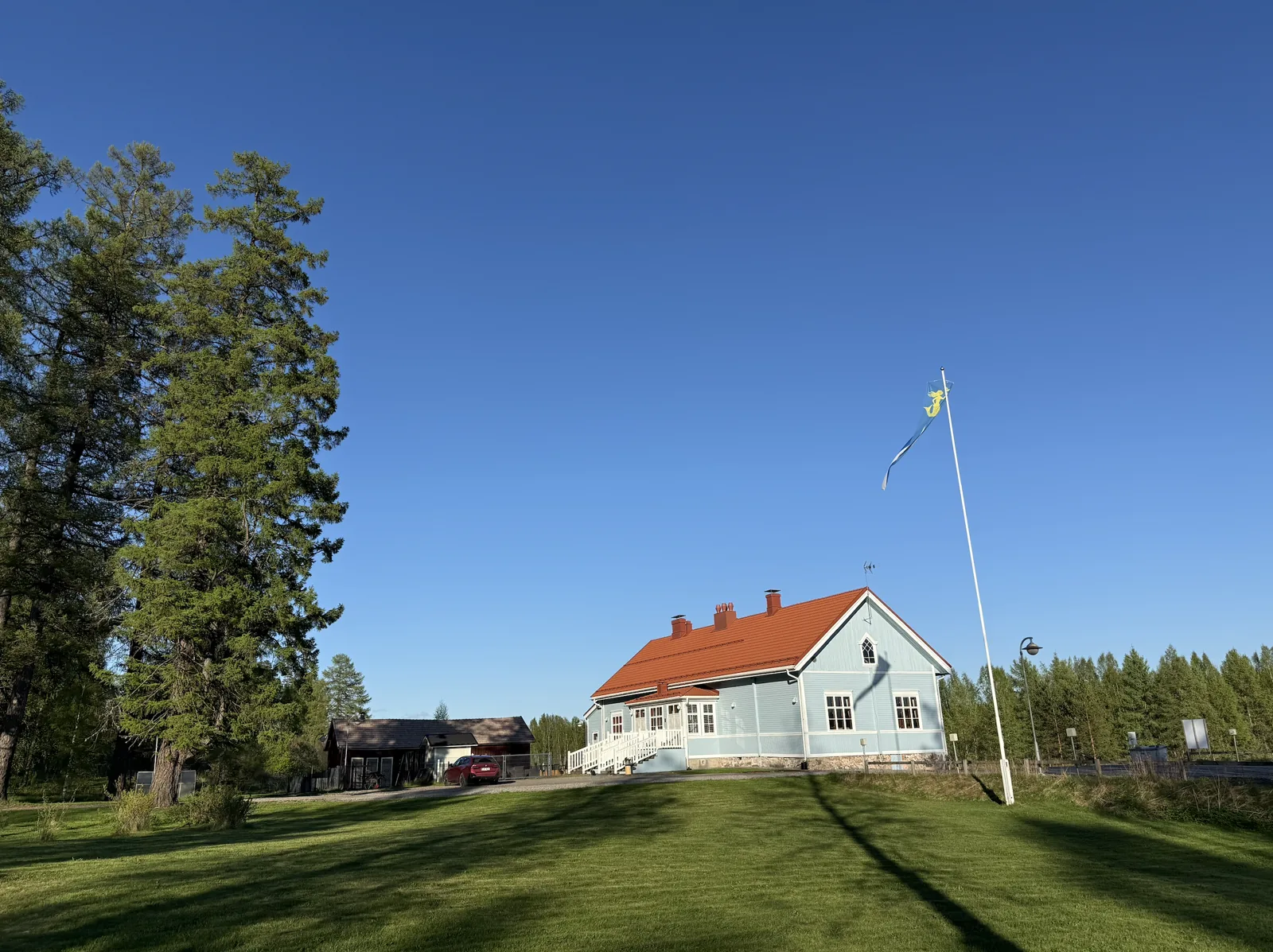
A tax registrar's home, an elementary school, teachers' housing, a kindergarten and now a place for celebrations and gatherings. Sininen Talo carries a century and a half of stories – not as a museum, but as a living part of village life.

Chapters
The life of the house
-
Mid-1800s
The Rauhamäki estate
The house was built as the home of tax registrar E. A. Vinter at a time when Finland was still part of the Russian Empire. The Rauhamäki buildings were considered exceptionally good for their time, and it was their good condition that later decided the fate of the house.
-
1882
Lusi elementary school
In August 1882 the rural municipality of Heinola bought the estate for an elementary school for 6,500 marks. A school was “fitted into” the rooms of the house, and for more than a hundred years the village children learned to read, write and count here.
-
1918
In the midst of history
During the Finnish Civil War, Lusi lay on important transport routes. During the Whites' first attack towards Heinola, Lieutenant Colonel Hjalmarson's command post was set up in the Lusi school – today's Sininen Talo.
-
1950s
The heart of the village
Children walked or skied to school, and in autumn they brought potatoes from their own fields and lingonberries from the forest for the school meals. During breaks they played ring games, and the school and the village formed a single whole.
-
1966–1969
From teacher to opera singer
Young elementary school teacher Jorma Hynninen taught in Lusi and lived with his family in the teacher's flat at the north end of the house. In 1969 he won the Lappeenranta singing competition, and his international career as a baritone began.
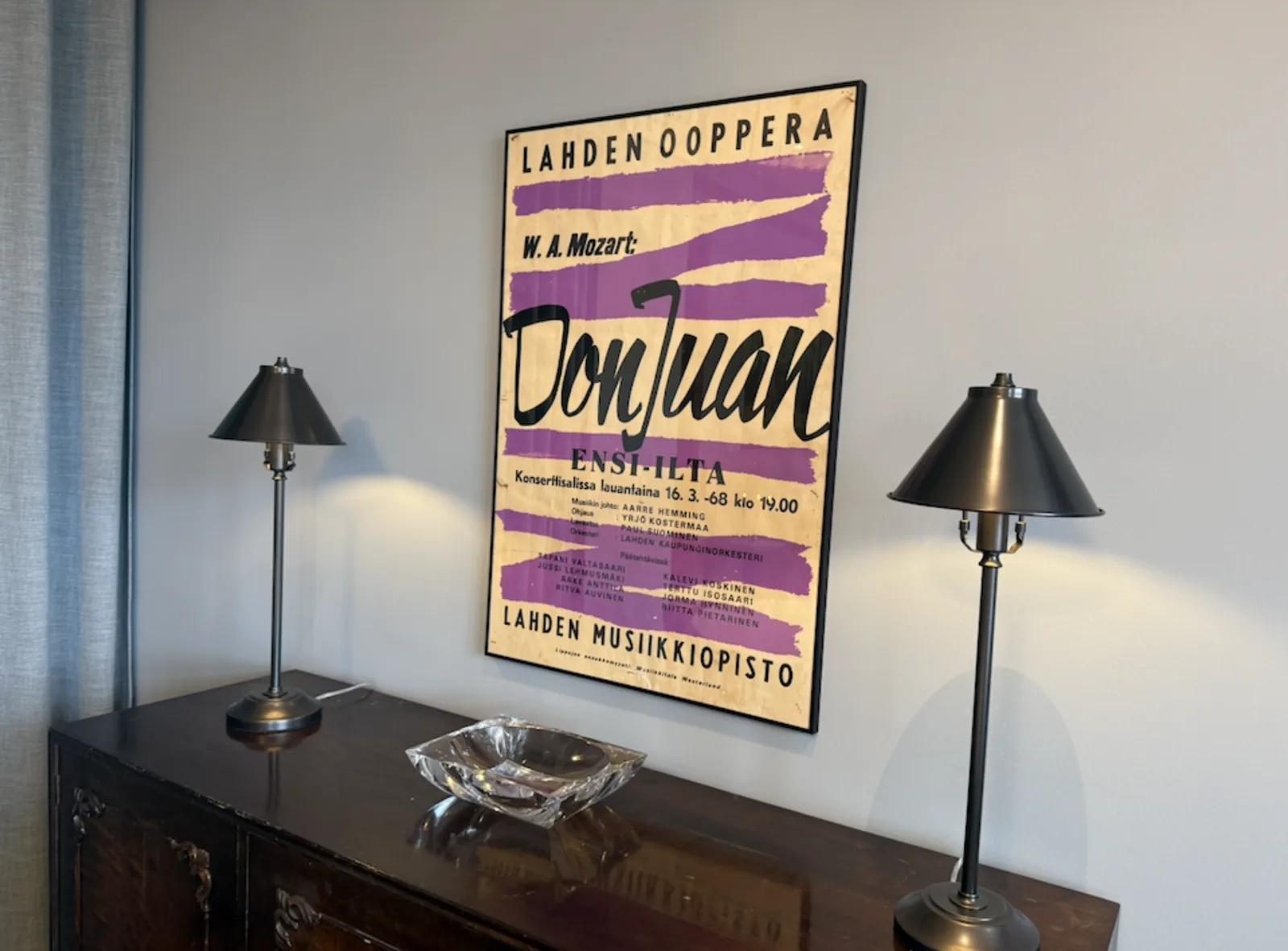
On the attic wall he pinned posters from his first opera roles. The 1968 Don Juan poster from the Lahti Opera now hangs framed in the green parlour, and in spring 2026 Hynninen returned to the house to celebrate his 85th birthday.
-
1971–2005
A school that dared to do things differently
During head teacher Matti Lunkka's 34 years, children learned by doing: flax was grown in the yard from seed to cloth, paper collections paid for a colour TV, and the villagers' memories were gathered into a local heritage collection. In 2002 the school received the permanent Green Flag eco-school award.
-
1980s
“I remember sitting by the window of the big hall during a history lesson. The teacher was talking about the past, but at the same time I could hear the birds singing outside. Summer was near, and it was wonderful to think that soon we'd be free for the whole summer.”
Kaisa Kromhof (née Malin) went to school at Sininen Talo in the 1980s -
2008
Satulinna kindergarten
When teaching moved to the newer building, the house was renovated into the Satulinna kindergarten. School desks gave way to play and crafts, and the house remained a place where the children of Lusi grew up.
-
2018–2024
Uncertainty and rescue
In 2018 the old part of the newer school building burned down, and in 2021 the town closed the Lusi school. When the kindergarten also closed, the house fell silent for the first time in more than a hundred years.
The villagers set out to save the newer school as a village hall, and Kaisa Kromhof, who grew up in Lusi, joined in with her husband René. In 2024 the newer school became the Lusi Village Hall and the oldest building became Sininen Talo.
-
2024
Two dreams meet
At a village brainstorming meeting, chef Alina Vanhalahti asked whether a cake buffet could one day be held in the house. That same summer she ran her first pop-up café. Alina's dream of her own café and catering business met Kaisa's wish to save the house – and Sininen Talo was born.
-
2025–2026
A new life
The house was restored with local businesses: drainage, extra insulation, repairs to the south-end timber frame and an exterior repaint. When the old cupboards at the back of the classroom were removed, the house's original doorway was found behind them and reopened as the passage to the blue salon.
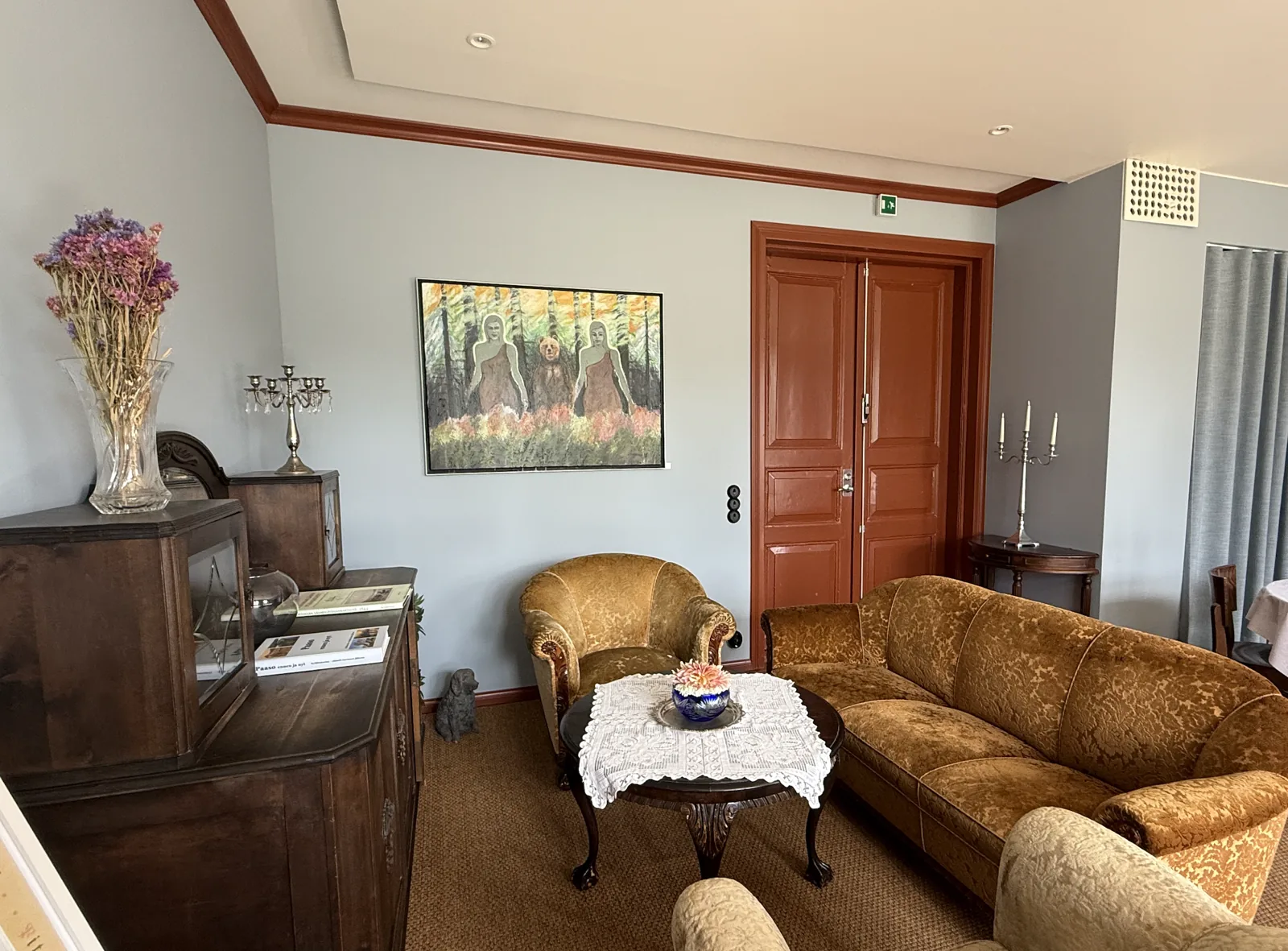
The furniture was sourced from antique shops, auctions and flea markets. On the salon wall hangs Mielikki, Otso and Ainikki, a painting Jorma Hynninen donated to the house. In spring 2026 Sininen Talo opened its doors, and Alina Cakes & Catering started its work in the house at the same time. Alina Vanhalahti, a chef who lives in Lusi, has run the café, the baking and the catering ever since.
Sources: Sininen Talo history booklet (2026), Meijän Lusi local history, Heinolan Sanomat 1923 and Kansakoulun Lehti 1935 (all in Finnish).

Come and write the next chapter
A celebration, a meeting or a coffee break: every occasion becomes part of the house's story. You're also welcome to visit the house beforehand.
News from Sininen Talo
Be the first to hear about new café days, festive buffets and seasonal treats.